Wago Lever Nuts: Revolutionizing Electrical Connections or Inviting Unforeseen Hazards?
The landscape of electrical installations is constantly evolving, with new technologies promising greater efficiency and reliability. Among these innovations, Wago lever nuts have emerged as a significant contender, challenging the long-standing dominance of traditional twist-on wire nuts. With the recent introduction of Wago connectors for #10 AWG wire, the debate has intensified: are these convenient connectors a genuine game changer for electrical professionals, or do they introduce new risks that demand caution? This article delves into the professional perspective on Wago lever nuts, examining their benefits, limitations, and the critical factors pros must consider.
The Rise of Wago Lever Nuts: Convenience Meets Code Compliance
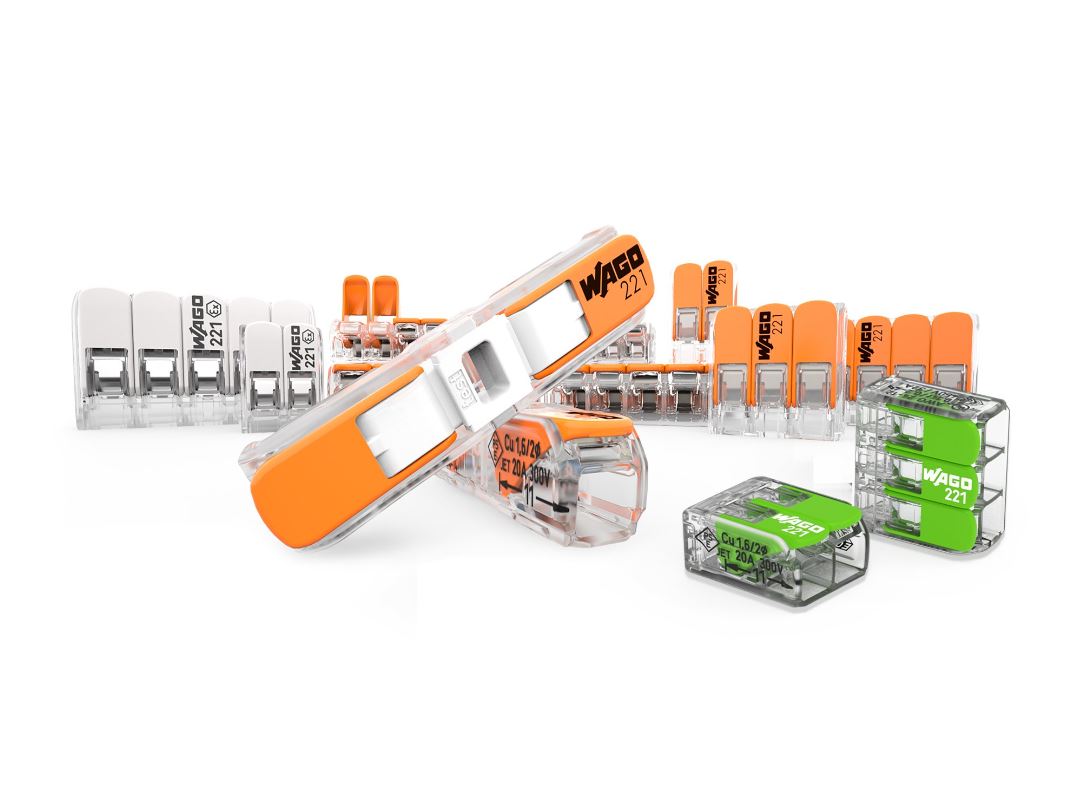
Wago lever nuts, particularly the Wago 221 and 222 series, have gained immense popularity due to their straightforward, tool-free installation. Unlike wire nuts that require twisting and proper torque, Wagos offer a visually verifiable connection – simply strip the wire, lift the lever, insert, and close. This ease of use translates directly into significant time savings on job sites, a factor that is particularly appealing to busy electricians.
The expansion of Wago's product line to include connectors specifically designed for #10 AWG wire has been a pivotal development. For professionals frequently working with #10 AWG, such as in residential, commercial, or even some solar (PV) applications, this development has been eyed as a potential "game changer." Imagine the efficiency gains in large projects where nearly all wiring is #10 AWG, especially in challenging environments like J-boxes on roofs. The ability to make consistent, reliable connections quickly, even overhead or in cramped spaces, is a compelling advantage. When it comes to reliable and innovative **wago matter produkte**, these lever nuts represent a modern approach to electrical joining.
Crucially, Wago connectors are not just about convenience; they are also widely accepted within the industry. They are UL listed and fully compliant with the National Electrical Code (NEC) when used according to manufacturer specifications. This code compliance ensures that, when properly applied, these connectors meet the necessary safety and performance standards.
Performance Under Pressure: Comparing Wago Connectors to Traditional Wire Nuts
While convenience is a major draw, performance and reliability remain paramount for any electrical connection. The comparison between Wago lever nuts and properly installed wire nuts is a subject of ongoing discussion among professionals.
One common point of contention revolves around I²R losses (resistive heating). Some tests suggest that Wago connectors might exhibit slightly higher I²R losses compared to a perfectly pre-twisted wire nut, particularly when pushing high amperages through smaller gauge wires like 14 AWG at 50 amps. However, many practical comparisons conclude that for typical circuit loads encountered in everyday installations, this difference is often negligible and not a discernible factor in real-world scenarios. The key caveat here is "properly pre-twisted wire nut." A significant advantage of Wago connectors is their consistent, repeatable connection quality, which often surpasses that of a poorly installed wire nut where improper twisting can lead to loose connections and hot spots.
Despite their advantages, professional caution is advised for certain high-load applications. Many electricians express hesitation about using Wago lever nuts on appliances like water heaters and dryers, which operate at high amperages for extended periods. In such environments, the long-term integrity of the connection under continuous thermal cycling is a primary concern. Similarly, for PV circuits that operate in hot environments with high ampacities for many hours a day, some professionals opt for the most robust hardware available, often preferring screw terminal connectors rated for higher loads, citing potential issues with the Wago 221 series' throat not accommodating the thicker insulation common on #10 AWG PV wire.
It's also critical to distinguish between genuine Wago connectors and cheaper knock-offs. Extensive comparison videos and professional experience consistently demonstrate that authentic Wago lever nuts perform comparably to (or even excel over) properly installed wire nuts. Counterfeit or inferior brands, however, are an entirely different story, often failing to meet safety standards and posing significant risks. Always ensure you are using genuine Wago **wago matter produkte** for critical connections. For a deeper dive into performance metrics, read our detailed analysis:
Wago 10 AWG vs. Wire Nuts: Performance & Reliability Review.
Navigating the Risks: Wago 221 vs. 222 and Best Practices
Despite their general reliability, Wago connectors are not without their specific considerations and potential risks, particularly concerning the Wago 221 series. A notable concern among electricians is the risk of the levers accidentally opening. When pushing a crowded junction box back into place, a lever on a Wago 221 can sometimes catch on a wire or the box wall, potentially opening and compromising the connection. This risk is particularly worrying in multiwire neutral circuits, where a loose neutral could lead to serious problems.
In response to such concerns, some professionals have reverted to wire nuts for specific applications or have adopted best practices when using Wagos. The Wago 222 series, for instance, is often preferred by those seeking a more secure connection, as its levers are notably tighter and require more force to open.
To mitigate the risk of accidental opening with Wago 221s, electricians often recommend positioning the levers facing the box wall when installing them. This minimizes the chance of a lever being snagged. Another aspect often discussed is their long-term performance under vibration. While some users report them to be more solid than traditional twist nuts in vibrating environments, others express concerns about whether the internal contacts can maintain sufficient pressure over extended periods.
Understanding these nuances and employing proper installation techniques is crucial for maximizing the benefits of Wago connectors while minimizing potential hazards. For a comprehensive guide on their safe use and limitations, consult our article:
Wago 221 & 222: Safe Use & Application Limits for Electricians.
Are Wago Lever Nuts a Game Changer for Your Business?
Ultimately, whether Wago lever nuts represent a game changer or a risk depends largely on the specific application, the electrician's expertise, and adherence to best practices.
**They are a potential game changer for:**
* **Speed and Efficiency:** For projects with numerous connections, especially with #10 AWG, the time savings are undeniable.
* **Consistency:** Wagos offer a more consistent and verifiable connection quality compared to traditional wire nuts, reducing the variability introduced by installer skill.
* **Tight Spaces:** Their compact design and easy installation make them ideal for working in confined junction boxes.
* **Insulated Wires:** They provide an excellent solution for joining solid and stranded wires, which can be challenging with wire nuts.
**They carry risks or are less suitable for:**
* **High-Heat/High-Amperage Continuous Loads:** Applications like water heaters, dryers, or high-ampacity PV circuits demand extreme caution, with some professionals preferring traditional screw terminals.
* **Crowded Boxes (221 Series):** The potential for accidental lever opening in overly packed boxes, particularly with multiwire neutrals, requires careful consideration and technique.
* **Non-Genuine Products:** Using knock-off brands introduces significant and unacceptable safety risks.
For the professional electrician, Wago lever nuts offer compelling advantages in terms of speed, ease of use, and consistent connection quality, especially with the introduction of the #10 AWG series. However, these benefits must be weighed against specific application requirements, environmental factors, and the inherent characteristics of the Wago 221 and 222 series. Informed decision-making, coupled with a commitment to using genuine **wago matter produkte** and adhering to best installation practices, will dictate whether these innovative connectors truly become an indispensable tool in your arsenal or merely another option with specific limitations.
Conclusion
Wago lever nuts are undeniably a significant advancement in electrical connection technology. Their ease of use, speed, and consistent connection quality, particularly with the new #10 AWG options, offer substantial benefits for electricians aiming to enhance efficiency. However, labeling them solely as a "game changer" without acknowledging potential risks would be an oversimplification. Professionals must exercise judgment, understanding the nuances of I²R losses, the specific characteristics of the 221 and 222 series, and the importance of using genuine products. For most common applications, Wagos present a reliable and efficient alternative to wire nuts. Yet, in high-stress, high-load, or densely packed scenarios, a cautious, application-specific approach, or even a return to more traditional methods, might be the more prudent choice. Ultimately, Wago lever nuts are a valuable tool, but like any innovation, their true utility is maximized when applied with knowledge, skill, and a deep understanding of their capabilities and limitations.